Key Takeaways
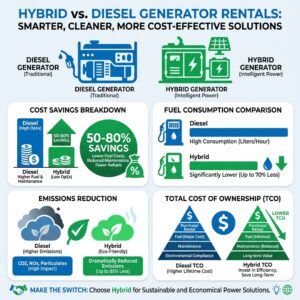
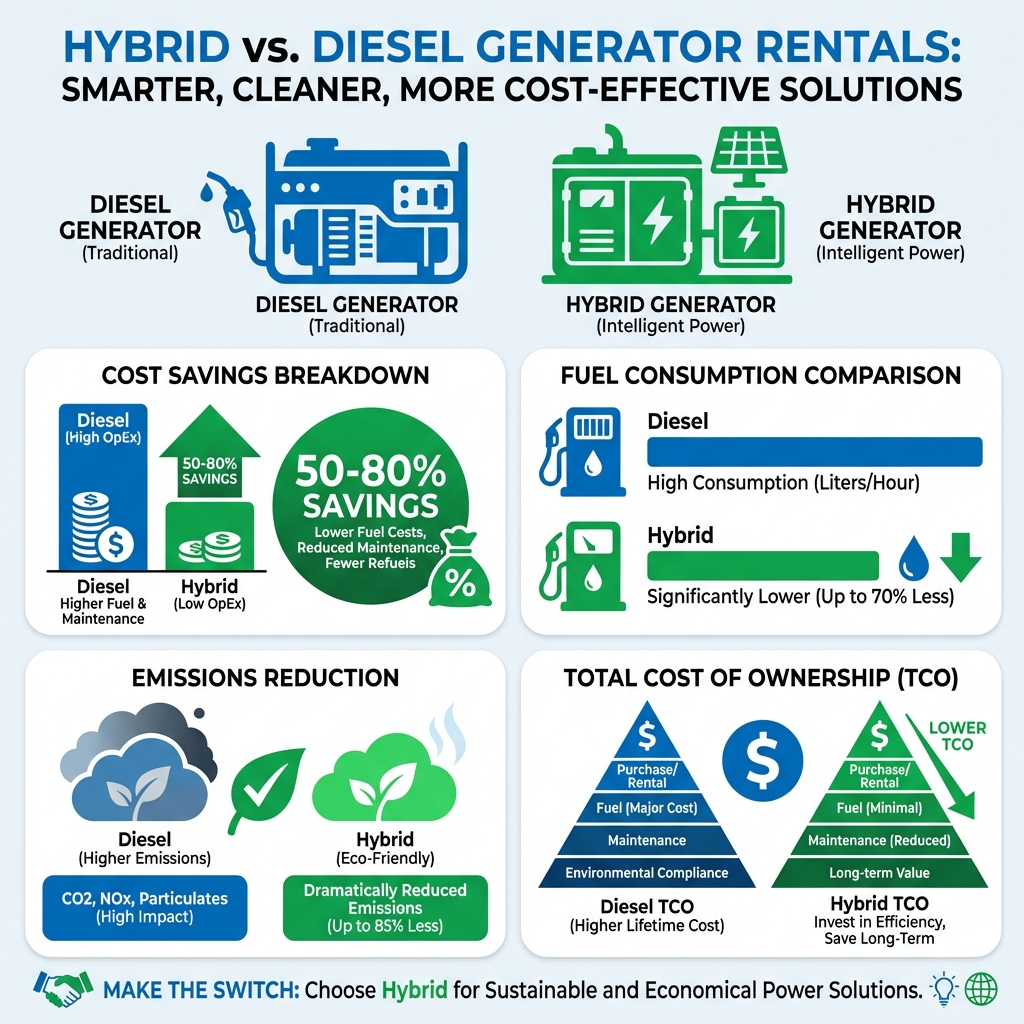
- Hybrid generators cut costs by 50-80% – Lower fuel use and maintenance save thousands per year
- Diesel still works for heavy loads – Best for construction sites needing constant high power
- Fuel savings add up fast – Hybrids use up to 70% less fuel than diesel units
- Rental rates vary by power – Expect $200-$800 per day based on size and features
- Environmental rules matter – Some cities require low-emission equipment in 2026
- Battery backup prevents downtime – Hybrid systems switch power sources without interruption
- Total cost beats daily rate – Factor in fuel, delivery, and maintenance for true savings
Hybrid generator rentals save most businesses 50-80% on operating costs compared to diesel. This happens because hybrids use battery power first and only run the engine when needed.
Diesel generators still make sense for some jobs. But the math has changed in 2026.
Here’s what you need to know.
How Much Do Generator Rentals Actually Cost?
Daily rental rates depend on power output.
A 20kW diesel generator costs $150-$250 per day. A 100kW unit runs $400-$600 daily. Large 500kW diesels can hit $1,200 per day.
Hybrid units cost 10-20% more upfront. But fuel savings erase this difference in days.
Generator rental rates also include delivery fees. Most companies charge $200-$500 for transport within 50 miles.
What Makes Hybrid Generators Cheaper to Run?

Hybrid generators use battery storage as the main power source.
The diesel engine only starts when batteries run low. This cuts fuel use by 50-70% compared to diesel-only units.
A diesel generator burns about 18 gallons per day. At $3.50 per gallon, that’s $52 daily in fuel costs.
Hybrid systems use 6-9 gallons for the same work. That’s $21-$32 per day.
Over a month, diesel fuel costs $1,560. Hybrid fuel costs $630-$960. You save $600-$930 monthly on fuel alone.
When Does Diesel Still Make More Sense?
Diesel generators work best for constant heavy loads.
Large construction sites running welders, compressors, and power tools need steady power. A diesel unit delivers this without battery management.
Remote locations without charging infrastructure also favor diesel. You can’t recharge hybrid batteries easily in the field.
Projects under 3 days might not see enough savings to justify hybrid logistics. The fuel difference only matters over time.
Construction site generator rentals often stick with diesel for these reasons.
How Do Maintenance Costs Compare?
Diesel generators need oil changes every 200-300 hours.
They also require filter replacements, coolant checks, and regular service. This adds $200-$400 per month for rented units.
Hybrid systems run the engine less. Fewer hours mean less wear. Maintenance costs drop 30-50%.
Battery systems need monitoring but rarely fail during rental periods. Most hybrid units include telematics that track performance and predict issues.
This reduces service costs by 12% according to 2023 industry data.
What About Environmental and Noise Rules?

Many cities now limit generator emissions.
California, New York, and other states require Tier 4 Final engines or cleaner alternatives. Some urban areas ban diesel generators entirely during certain hours.
Hybrid generators meet these standards easily. They produce fewer emissions and run quieter.
Noise matters for events, hospitals, and residential areas. Diesel units create 70-80 decibels at full load. Hybrids operate at 50-60 decibels in battery mode.
Check local rules before renting. Lighting towers and generators face the same restrictions.
How Long Does Each Type Last on a Tank?
A 100-gallon diesel tank runs a 50kW generator for about 40 hours at 50% load.
You need refueling every 2 days for continuous use. Fuel delivery adds $150-$300 per trip.
Hybrid systems stretch the same tank to 80-120 hours. The battery handles light loads while diesel covers peaks.
This cuts refueling trips in half. Fewer deliveries mean lower costs and less downtime.
What’s the Real Total Cost Over a Month?
Let’s compare a 50kW generator for 30 days.
Diesel Total:
- Rental: $350/day × 30 = $10,500
- Fuel: 18 gal/day × $3.50 × 30 = $1,890
- Delivery: $400
- Maintenance: $300
- Total: $13,090
Hybrid Total:
- Rental: $400/day × 30 = $12,000
- Fuel: 7 gal/day × $3.50 × 30 = $735
- Delivery: $400
- Maintenance: $150
- Total: $13,285
Wait – hybrid costs more here?
The difference is the rental rate. But extend this to 60 days and hybrid wins by $1,200. At 90 days, you save $2,400.
Hybrid generators make sense for projects over 3-4 weeks.
Which Industries Benefit Most from Hybrid Rentals?
Events and film production love hybrid generators.
They need quiet, clean power for days or weeks. Battery mode runs silently during filming or performances.
Data centers and healthcare facilities use hybrids for backup power. The automatic switching prevents any power gaps.
Retail construction and renovation projects also benefit. Lower noise and emissions keep neighbors happy.
Generator service teams report highest hybrid demand from these sectors.
How Do You Choose the Right Size?
Calculate your peak load first.
Add up all equipment wattage. Include startup surge for motors and compressors. This gives your minimum generator size.
Add 20-30% buffer for safety. A 40kW load needs a 50-55kW generator.
Hybrid systems handle surge loads differently. The battery provides instant power while the engine ramps up. This prevents voltage drops.
Diesel units need larger capacity to handle surges. You might need a 60kW diesel for the same 40kW load.
Right-sizing matters. Oversized generators waste fuel. Undersized units fail under load.
What Questions Should You Ask Rental Companies?
Start with fuel consumption specs.
Ask for gallons per hour at 50% and 75% load. This shows real operating costs.
Check what’s included in the rental rate. Some companies bundle delivery, setup, and fuel. Others charge separately.
Find out about emergency service. What happens if the unit fails at 2 AM?
Ask about monitoring systems. Modern generators track runtime, fuel level, and maintenance needs remotely.
Contact generator rental providers with these questions before signing.
What This Means for You
Hybrid generators save money on projects lasting more than 3 weeks.
They cut fuel costs by 50-70% and reduce maintenance needs. Environmental compliance comes standard.
Diesel generators still work best for short-term heavy loads. They’re simpler and widely available.
Run the numbers for your specific project. Factor in rental rate, fuel, delivery, and duration.
The right choice depends on your timeline and power needs. Both options work – one just costs less over time.