
Key Takeaways
- Most “dead” rental units are batteries, an e-stop, or a shutdown the panel already named. Not a fried engine.
- Split the failure in 10 seconds: no crank, cranks but won’t fire, or runs with no power.
- Federal facility data puts dead starting batteries at the top of generator fail-to-start lists. E-stop left in is on that same list.
- Controllers often cut cranking at about 30 seconds and call it overcrank. Hammering the start button cooks the starter.
- If it starts then dies under a light load, you may be looking at fuel, low oil, or wet stacking from running too small a load.
A generator not starting is usually one of three stories. It doesn’t crank. It cranks and never fires. Or it runs and still gives you no voltage. Name which one you have. Then walk the unit once before anyone grabs a wrench.
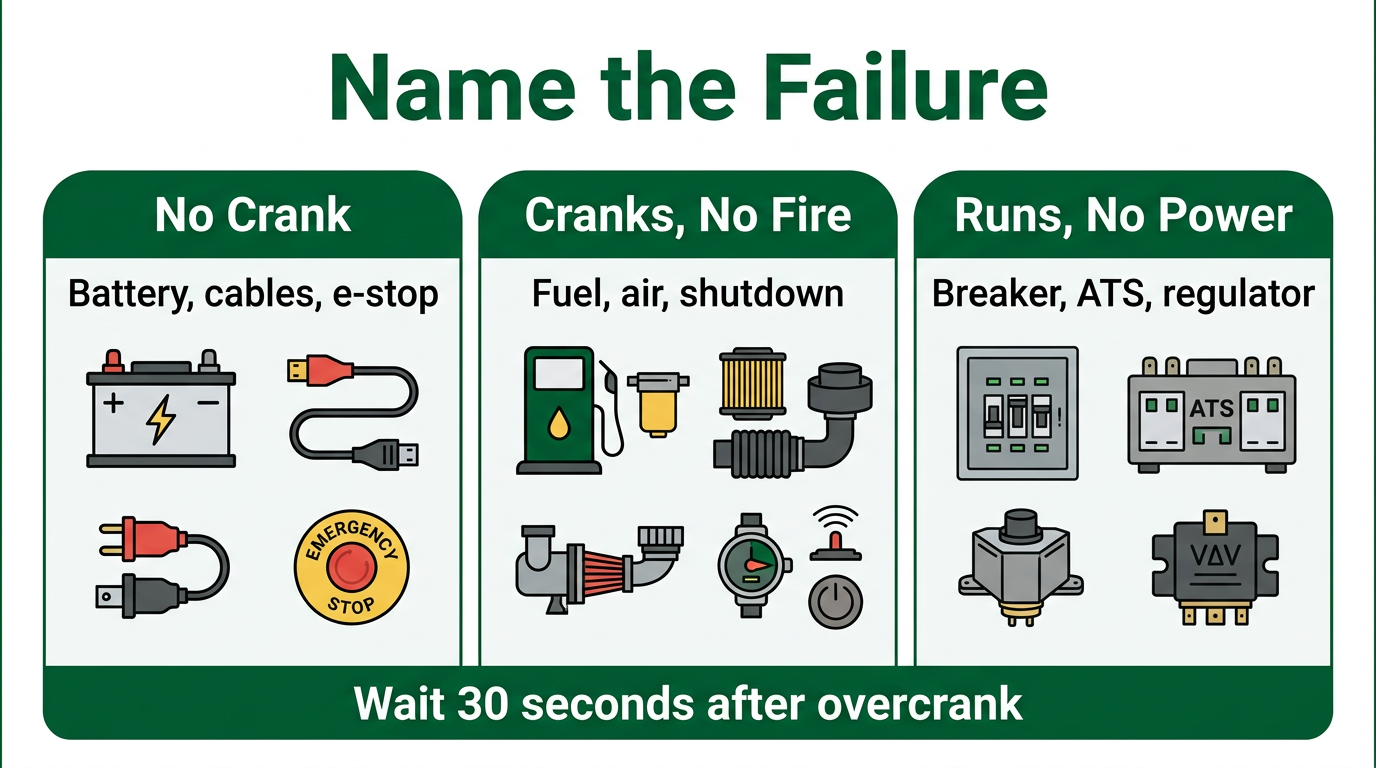
Name the failure first
No crank means the starter never turns the engine. Listen for a click, a slow groan, or nothing. That’s battery, cables, e-stop, or a controller lockout.
Cranks but won’t start means the engine spins and never catches. That’s fuel, air in the lines, a shutdown solenoid, or a panel still holding a fault.
Runs with no power means the engine is happy and the electrical end isn’t. That’s a tripped output breaker, a transfer switch, or a voltage regulator issue. Don’t rebuild the engine for that.
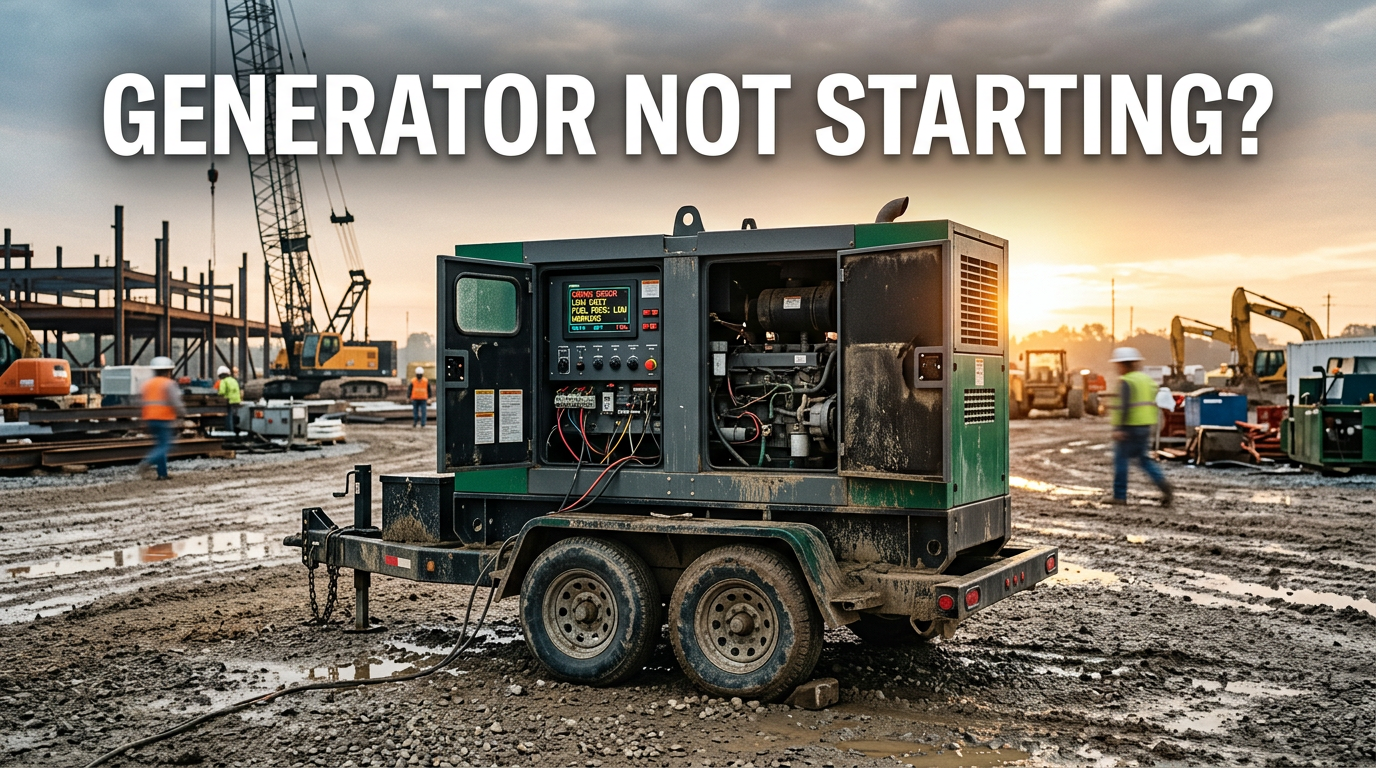
Portable pull-start videos will not help you here. A temporary generator on a Texas job site is a diesel package with a controller, safety shutdowns, and a battery bank. Treat it like one.
The walk-around that fixes most units
Start at the red button. An e-stop mashed in during yesterday’s lockout is a classic. Federal generator-maintenance briefings still list emergency stop left engaged in the top 10 reasons a unit fails. Twist it out. Read the screen. Write down every code before you reset anything.
Then look at the battery. Corroded posts and loose lugs drop voltage the second the starter asks for current. The engine sounds like it’s wading through mud. Clean the terminals. Tighten them. If the lights on the panel sag when you hit start, the battery is done. Repeated failed cranks drain it further, which is why the same brief tells you not to keep stabbing the button.
Fuel next. Day tank level. Supply valve open. Water in the separator. Filters that haven’t been touched since the last site. Contaminated diesel shows up as a unit that cranks fine and never fires, or fires and dies. Keep tanks topped to cut condensation. That’s also in the fuel delivery playbook.
Oil and coolant are the cheap shutdowns. Low oil pressure trips the unit and it will not restart until you fix the cause. A jacket water heater that died overnight makes a cold diesel stubborn. Texas winters are mild until they aren’t. Austin Bergstrom can sit about 10 degrees colder than Camp Mabry on a clear night. Same city. Different start.
| What you see | Likely cause | What to do |
|---|---|---|
| Silence, or one click | Battery, cables, e-stop, breaker | Reset e-stop, check voltage, clean lugs |
| Slow crank | Weak battery or cold engine | Charge or swap battery, confirm block heat |
| Cranks, no fire | Fuel, air in lines, shutdown solenoid | Fuel level, valves, separator, don’t keep cranking |
| Starts, then dies | Low oil, overheat, overload, wet stack | Read the code, check oil and load |
| Runs, no voltage | Output breaker, ATS, regulator | Check breaker and hookup before blaming the engine |
Don’t cook the starter
Overcrank is a controller protecting the starter, not a personality test. On many industrial sets, cranking stops in about 30 seconds. The status light blinks. You wait a few seconds, then try again. After several attempts, you give the starter a real rest. Keep going and you turn a no-start into a no-starter.
If it cranks with no smoke, you likely have no fuel at the injectors. Air in the system after a filter change is a common one. Priming is qualified-person work. It is not “a few more hits of the key.”
It started. Then it quit.
A unit that dies under load is a different animal. Check oil pressure and coolant first. Then look at the load. Diesel engines that loaf below about 30 percent of rated capacity can wet stack. Unburned fuel and soot collect in the exhaust. You get slobber on the stack, smoke, and a unit that feels weaker than the nameplate.
The fix is load, not another start attempt. A load bank pulls the engine up to a real percentage of rating so it can actually get hot. Annual tests at 50 percent or more, often 80 to 90 percent for 30 to 60 minutes, are the standard way to burn that junk out. We covered the mechanics in load bank testing.
If the engine is fine and the tools are dead, walk the output. Breaker open. Cam-locks on the wrong phase. Transfer switch still on utility. That’s generator hookup territory, not a no-start.
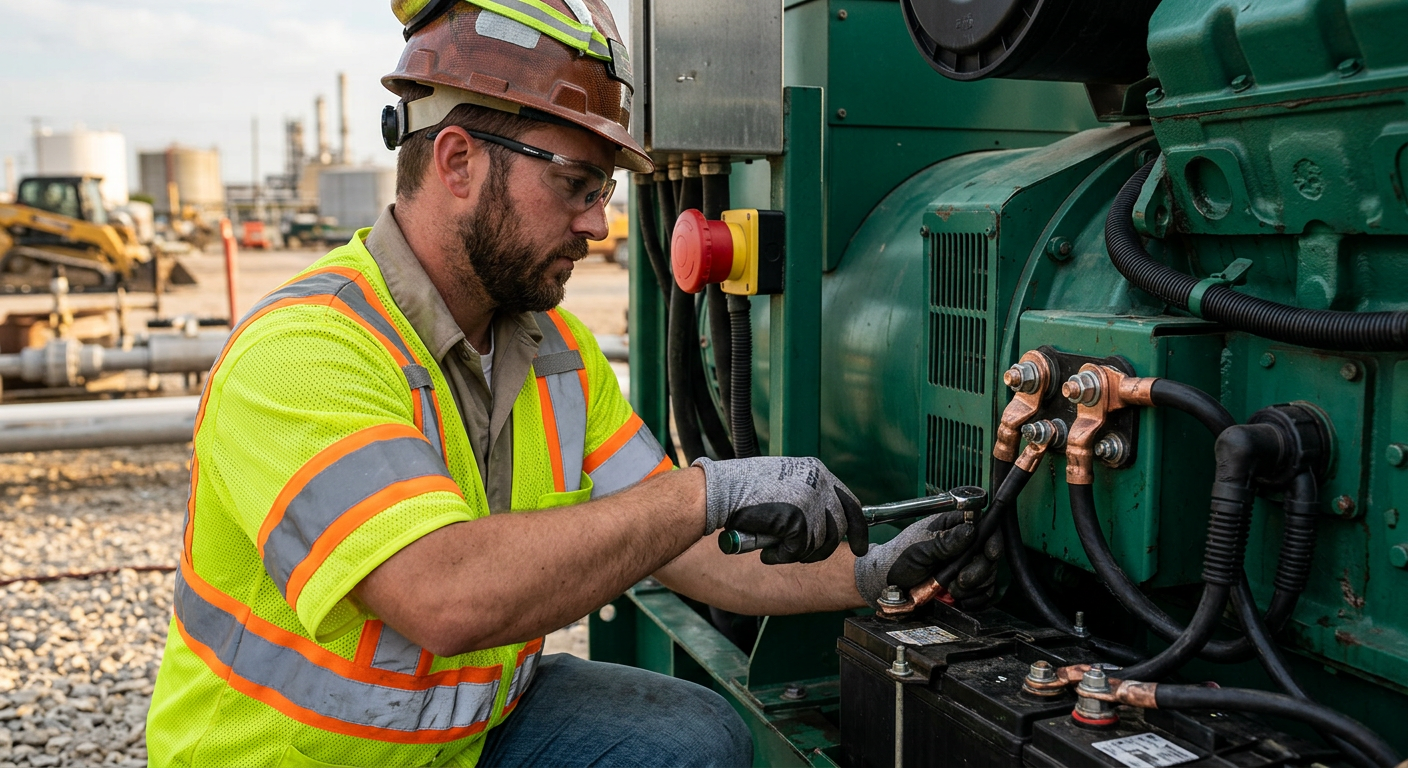
Routine care still prevents most of this. Oil, filters, fuel, batteries. The maintenance checklist is boring on purpose.
If the panel is throwing codes you don’t know, or the unit has already eaten five crank cycles, stop. Call for a swap. JC Davis Power watches these fleets so you don’t spend the morning on a dead battery. Get in touch at (866) 448-1594 and we’ll get a running unit on the pad.
FAQ
What is the most common reason a generator won’t start?
On industrial packages, a weak or dead starting battery is the one we see first. Loose cables and an e-stop left in are right behind it. Fuel problems show up next: empty day tank, closed valve, water in the separator.
What can I do to troubleshoot a generator that isn’t starting?
Read the controller. Reset the e-stop. Check battery voltage and cable tightness. Confirm fuel level and valves. Check oil and coolant. If it still won’t fire after a couple of crank cycles, stop and call it in. Don’t keep grinding the starter.
Why is my generator running but not producing any power?
The engine and the electrical end are different systems. Check the output breaker, the cam-lock sequence, and the transfer switch position. If those are right, you’re into regulator or winding issues. That’s a technician, not a jump pack.
What is generator overcrank?
Overcrank is a shutdown that hits when the engine doesn’t start inside the controller’s crank window, often about 30 seconds. It’s there to save the starter. Wait, then try again. After a few attempts, let it cool. Find the real cause.