
Key Takeaways
- Emergency light tower rental is portable LED light for night recovery when the grid and streetlights are dead.
- FEMA lists portable area illumination for work areas, rescue sites, and staging during night operations.
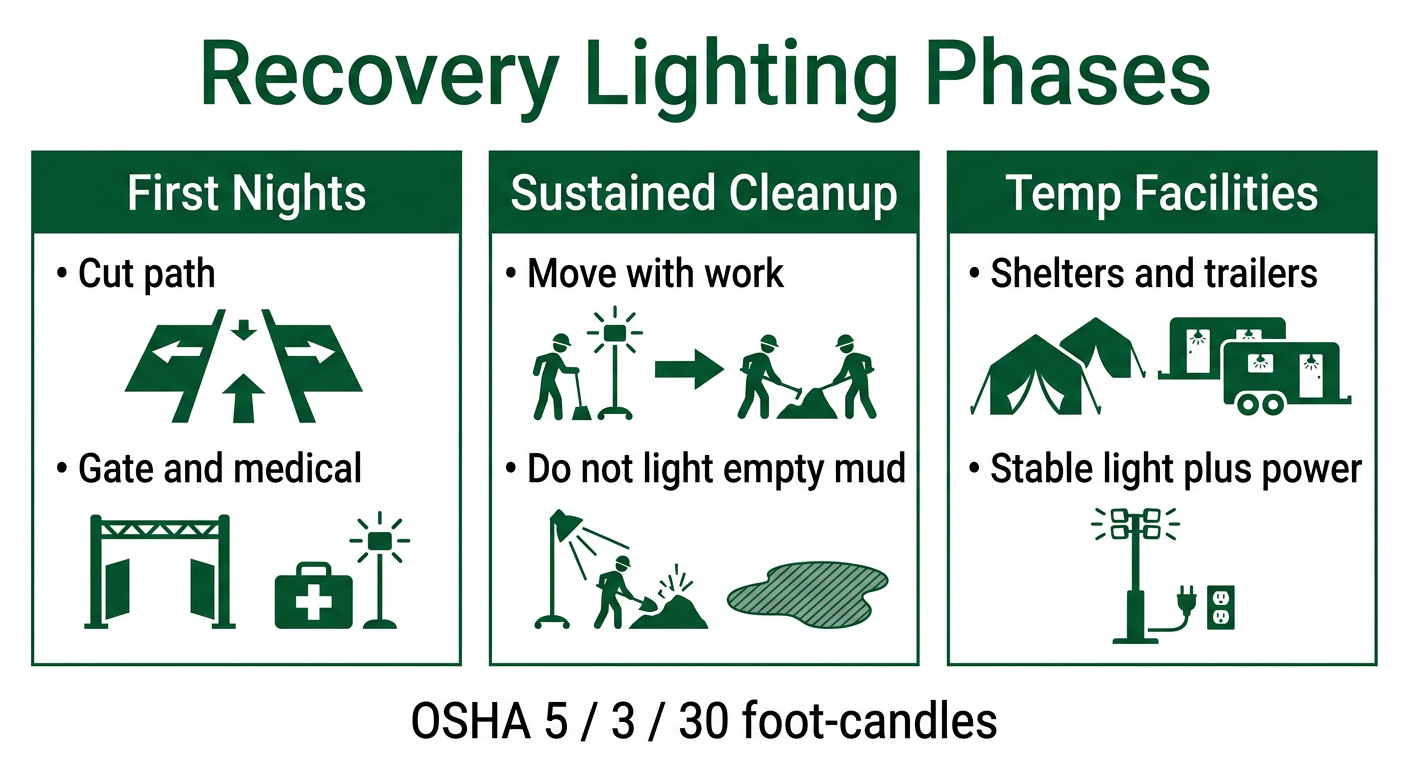
- OSHA construction floors still apply. General work areas need 5 foot-candles. Access and storage sit at 3. First aid sits at 30.
- Stage lighting by phase. Day-one placements go stale when the cut moves.
- Towers without a fuel plan go dark on night two. Pair them with temporary generator power.
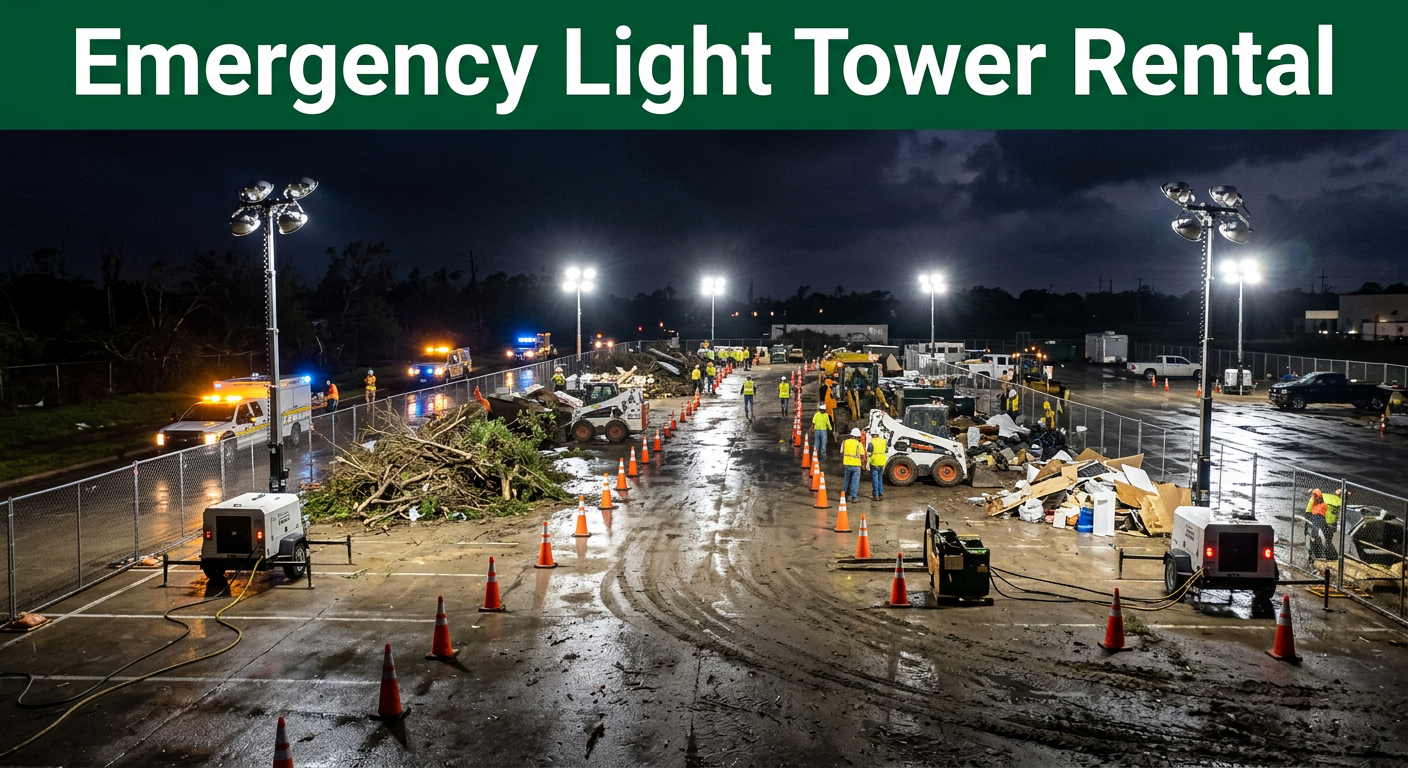
Emergency light tower rental is short-notice portable LED lighting for night recovery when the grid is out. On Texas hurricane and flood sites, that means debris lanes, staging, shelter edges, and pump pads. Crews still work after sunset. Guesswork is not a lighting plan.
This is not exit-sign lighting
Bathroom egress gear will not cut a debris lane. You need towable LED towers that throw work light across a yard, a cut in the pile, or a temporary shelter compound.
After a Gulf hurricane or a Central Texas flash flood, the sun still sets. Saws and loaders do not stop. Handheld lanterns and truck headlights make one bright cone and a lot of black. People trip. Swing radius disappears. Night work turns into luck.
FEMA treats portable area illumination as response gear. Item 03OE-03-LTPA covers work areas, rescue sites, and staging when ambient light is not enough. Separate lines cover decontamination-area lighting and high-intensity perimeter lighting. You do not need a grant number to rent a tower. You do need the same mindset. Light the operation. Not only the parking lot.
| Recovery zone | Why it needs light | What fails first |
|---|---|---|
| Debris lane / cut path | Saw and loader traffic after dark | One handheld aimed the wrong way |
| Staging / check-in | Accountability and gear issue | Dark corners full of hose and plate |
| Shelter edge | Safe movement outside tents and trailers | Spill into sleeping areas, or none at entries |
| Pump / generator pads | Fuel, cords, rotating gear | Shadows that hide leaks and trip hazards |
| First-aid edge | Patient movement and handoff | Undersized lights that blind more than they help |
Foot-candles still apply when poles are down
Recovery sites look like construction sites because they often are. 1926.26 requires illumination where work is in progress. Table D-3 in 1926.56 sets the floors:
- 5 foot-candles: general construction areas
- 3 foot-candles: excavation, waste areas, access ways, active storage, loading, refueling, field maintenance
- 30 foot-candles: first aid stations and offices
Nobody meters every square foot in the first 72 hours. You still fail people if the debris lane is black and the only light is a truck headlight. Set towers so crews can see footing, swing radius, and each other. Recheck after every move. Storm sites change shape overnight.
Navy construction lighting guidance suggests planning coverage around mounting height. One pole covers about four times the mounting height in area terms. Use it as a start. Prove it with a night walk once the first cut is open. Our how many light towers guide covers the same sizing logic on normal jobs. Disaster sites just move faster.
Stage by phase, not by hope
First nights. Priority is the cut path, the staging gate, and the medical edge. Fewer towers. Better aimed. Fuel trucks and spare filters matter as much as lumen count. Get light where people and iron move. Then expand.
Sustained cleanup. Add coverage as lanes widen. Move towers with the work. Leaving day-one placements that now light empty mud is how crews waste rental dollars.
Temporary facilities. Shelters, trailers, and charging points need stable light and power. That is when light towers and mobile office power show up together. Entries need wash. Sleeping areas need controlled spill, not a stadium blast through canvas.
Texas Gulf crews already know the generator half of this. Our hurricane generator rental guide covers storm power. Lighting keeps night ops from becoming guesswork. Inland flood recovery follows the same placement logic even when the wind never hit Category force. Flash floods and ice storms create the same dark-site problem without a named hurricane.
Power and fuel belong in the same plan
Most jobsite towers carry their own diesel. That is fine until the tank is empty and the roads are blocked. Treat fuel delivery like a critical path item. Same discipline we use on long construction hires in the fuel management guide.
Command trailers, pumps, and radios still need a genset. Size it for the real night load, not the brochure. If the tower fleet and the trailer farm share one undersized machine, something darkens when the load spikes. Walk the construction generator sizing math before the next named storm. Distribution from the genset to the tools matters too. Our temporary power distribution guide covers how power gets from the pad to the cord.
Before the next Gulf system, confirm:
- Tower count for gate, debris lane, staging, and medical edge.
- Fuel days on site, plus a delivery plan if roads stay bad.
- Genset capacity for trailers and critical pumps.
- Who owns night repositioning when the cut moves.
- Spare lamps, cords, and a call tree if a unit faults.
- Who authorizes tower moves so units do not light empty ground for three days.
Pre-position relationships beat panic calls. When every contractor in the county dials the same morning, the crews with a staging plan already on paper get equipment first.
Texas patterns we keep seeing
Gulf landfall, inland cleanup. Beaumont-to-Houston corridors take the wind. Austin and Dallas often take evacuees, hotel overflow, and secondary debris. Lighting demand shows up in both places. Cut lanes on the coast. Staging and shelter edges inland.
Flash flood week without a named storm. Hill Country and Central Texas can lose roads and power in one night of rain. Recovery looks smaller than a hurricane. The lighting problem is identical. Dark lanes. Wet footing. Equipment that cannot wait for sunrise.
Industrial plant restart. After a storm or outage, temporary lighting around pumps, trailers, and access roads often runs longer than the first debris push. Pairing towers with temporary generator power stops being optional there.
If you work statewide, pre-plan by corridor. A vendor who only covers one metro will strand you when the work shifts fifty miles overnight.
Mistakes that burn the first 72 hours
One tower somewhere in the middle. Bright island. Black edges. Work happens on the edges.
Lighting the parking lot and ignoring the cut. The danger is where the saws and loaders are.
No fuel reserve. Night two goes dark. Recovery does not pause for a closed road.
Blinding the medical edge. Aim for usable foot-candles, not glare into triage.
Forgetting shelters after the first week. Temporary facilities need controlled light at entries and paths, plus power for HVAC and communications.
Treating lighting and generators as unrelated rentals. They fail each other when nobody coordinates. Storm recovery is a package problem.
Leaving equipment unmarked overnight. If iron sits next to an open road or active area, OSHA 1926.600 still wants lights, reflectors, or lighted barricades.
Ask this before the next storm
Can towers mobilize on short notice into the Gulf and inland Texas corridors you actually serve?
Who owns fuel when roads are restricted, and what is the contingency?
Can the same team supply temporary generator power for trailers and pumps?
Will units reposition as phases change without a fight over change orders?
What is the after-hours fault response when a tower dies mid-shift?
Do you get help mapping first-night priorities (cut, gate, medical) before the trucks roll?
If fuel and repositioning answers are vague, you are buying hope. The Texas light tower rental guide is useful pre-storm reading for coverage basics. Disaster work just compresses the timeline.
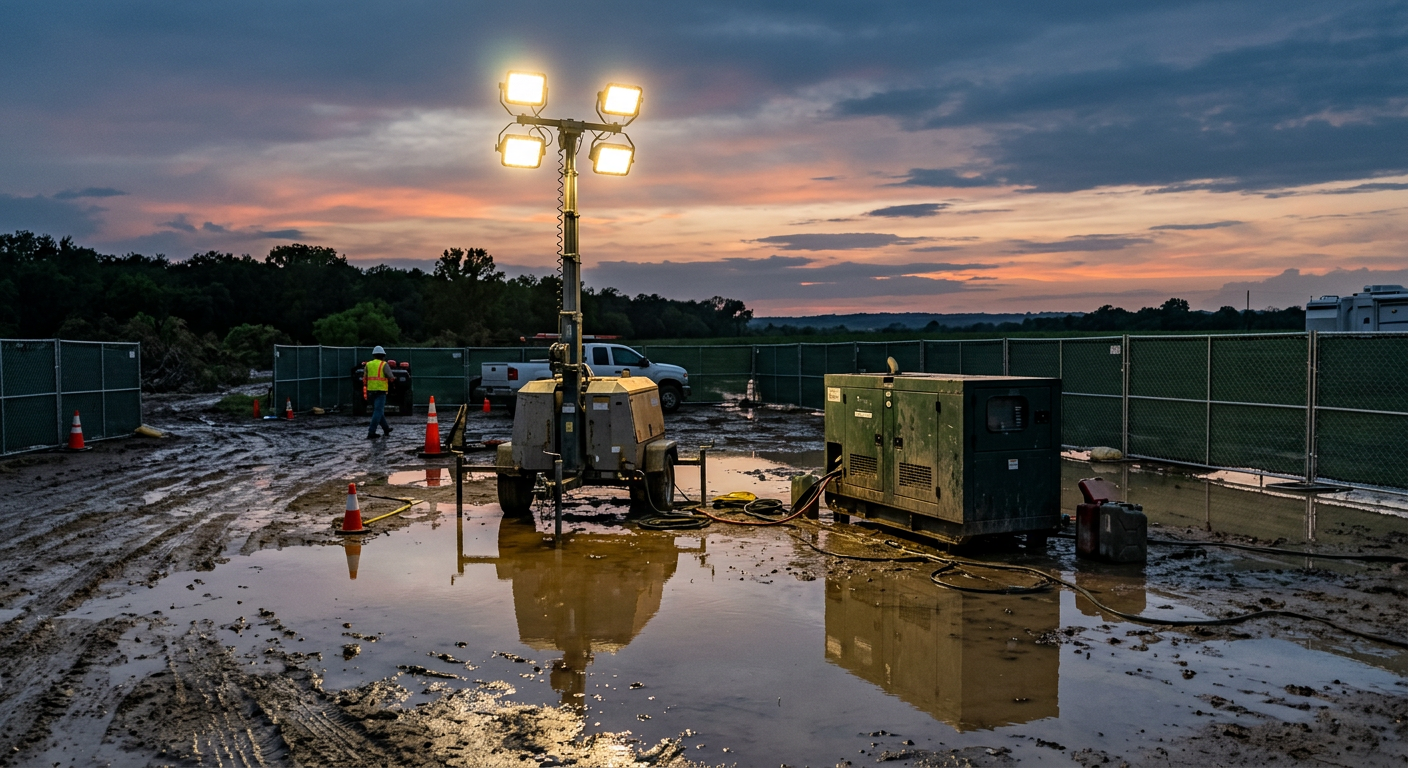
Emergency light tower rental is a logistics plan wearing a mast. Know the zones. Hit OSHA floors where people and iron move. Stage by phase. Keep fuel and gensets in the same conversation as the lights.
We support contractors and facility teams across Austin, Dallas, San Antonio, Fort Worth, Waco, and the wider Texas network, including Gulf-adjacent work when storms push inland. If you need emergency light tower rental for Texas recovery work, contact us at (866) 448-1594. We’ll match towers and temporary power to the phases you actually run after dark.
FAQ
What is emergency light tower rental?
Short-notice rental of portable LED light towers for night operations when permanent power and street lighting are out. Typical on hurricane, flood, and debris recovery sites.
Does FEMA require a specific light tower?
FEMA’s AEL describes portable area illumination for night work and staging. Grant-funded buys follow that list. Private contractors rent equivalent gear to light the same kinds of zones.
How bright should a recovery site be?
Use OSHA’s construction floors as the baseline: 5 foot-candles for general work areas, 3 for access and storage, 30 for first aid. Aim towers so people can see footing and equipment swing, not just a bright spot in the middle.
Should lighting and generators be rented together?
Yes on multi-day recoveries. Towers handle area light. Generators handle trailers, pumps, and communications. One vendor coordinating both cuts the chance that night two goes dark for fuel or capacity reasons.
When should we order towers relative to landfall?
As early as your activation plan allows. Pre-storm reservations beat competing with every contractor in the corridor the morning after. Confirm fuel and repositioning in the same call.
Sources
- FEMA AEL 03OE-03-LTPA, Portable area illumination
- FEMA AEL 08D2-01-LITE, Decontamination area lighting
- FEMA AEL 14SW-01-LITE, High-intensity lighting
- OSHA 1926.56, Illumination
- OSHA 1926.26, Illumination
- OSHA 1926.600, Equipment (night markings)
- Navy Construction Electrician Intermediate: Mounting Height and Spacing