
Key Takeaways
- NOAA forecasts 8 to 14 named storms for the 2026 Atlantic season, with 3 to 6 possibly becoming hurricanes. It only takes one to knock out your power.
- Reserve early. Once a system enters the Gulf, rental fleets across Southeast Texas get claimed within days.
- Most Gulf Coast businesses need a 20 kW to 150 kW unit, sized to what actually has to stay running.
- Portable generators are tied to nearly 100 deaths a year from carbon monoxide. Placement and proper setup keep your crew safe.
- Renting beats buying for storm backup: no idle equipment, no maintenance bills, and fuel plus delivery handled for you.
- A contingency contract locks in a unit and a price before demand spikes.
A hurricane generator rental gives Gulf Coast Texas businesses backup power without buying a unit that sits idle most of the year. Reserve it early. Once a storm enters the Gulf, available units in the Beaumont and Port Arthur area disappear fast.
We’ve supplied storm power across Southeast Texas long enough to know the pattern. The calls come after the cone shows up on the news. By then, the good units are spoken for.
Why Smart Texas Businesses Reserve Power Before the Cone Appears
The 2026 Atlantic hurricane season runs June 1 through November 30. NOAA calls for a below-normal season, but “below normal” still means up to 14 named storms. The Texas coast only needs one landfall to flood substations and drop power for days.
Here’s the thing about storm season. Demand for rental generators is flat for months, then it explodes in 48 hours.
When a system enters the Gulf of Mexico, every business from Houston to Lake Charles starts calling at once. Hospitals, grocery chains, and cold-storage operators reserve first. A 24/7 operation in Jefferson County can’t run on a unit that’s already on someone else’s job site.
Booking ahead is how you skip that scramble. A reserved unit is yours before the rush, not after.
What Size Generator Do You Need for Hurricane Backup?
Most Gulf Coast businesses need somewhere between 20 kW and 150 kW, depending on what has to keep running. A small clinic that just needs lights, outlets, and a few critical circuits sits at the low end. A grocery store running refrigeration, HVAC, and registers sits much higher.
Start by listing your must-run loads, not your total panel rating. You rarely need to power everything at once.
| What has to stay running | Typical generator size | Common Gulf Coast user |
|---|---|---|
| Lights, outlets, a few critical circuits | 20–50 kW | Small office, clinic, retail shop |
| HVAC, refrigeration, servers, point-of-sale | 60–150 kW | Grocery store, medical office, restaurant |
| Full commercial or industrial operation | 150 kW and up | Cold storage, manufacturing, large facility |
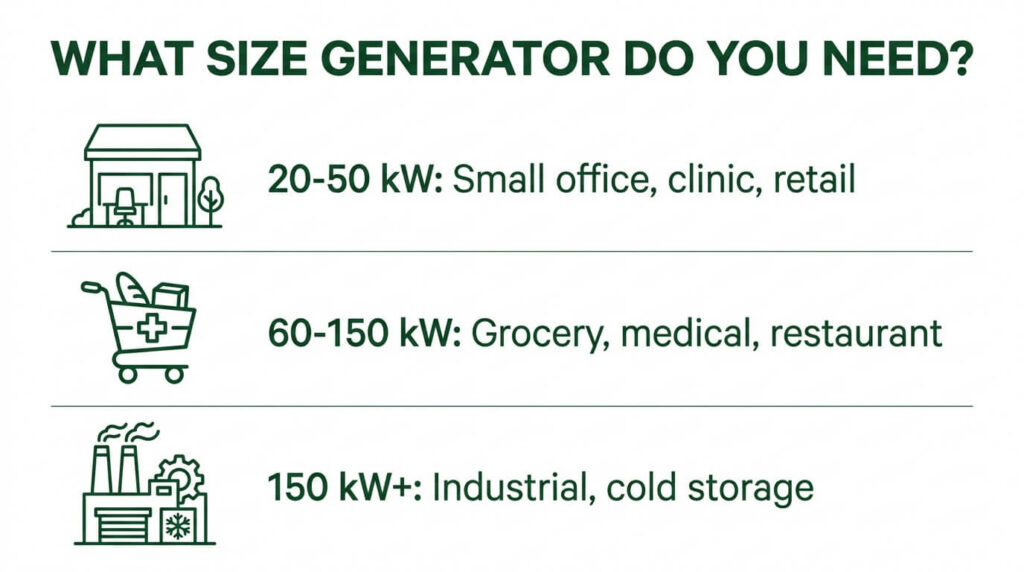
A unit that’s too small drops out under load when the compressor kicks on. One that’s far too big wastes fuel and money. Getting the size right matters more during a multi-day outage, when every gallon of diesel counts.
If you’re unsure, a quick load assessment settles it. Our team sizes units against real equipment lists every storm season, and we lean toward mobile office power generation setups that match the load instead of overshooting it.
Is It Cheaper to Rent or Buy a Storm Generator?
For most Gulf Coast businesses, renting wins. A storm generator you buy sits unused 11 months a year, still costs money in maintenance and storage, and may not start when you finally need it. Renting puts a tested, ready unit on site only when a storm threatens.
The math favors ownership only if you run the generator regularly all year. Pure storm backup rarely does.
| Factor | Renting | Buying |
|---|---|---|
| Upfront cost | Low, pay per use | High capital outlay |
| Maintenance | Handled by the provider | Your responsibility year-round |
| Storage | None | You store and protect it |
| Readiness | Delivered tested and fueled | Depends on your upkeep |
| Right-sizing | Match the unit to the job | Locked into what you bought |
Renting also lets you scale. A growing operation in Beaumont can move from a 50 kW unit one season to a 125 kW the next, without selling old equipment. For a full cost breakdown, our generator rental cost guide walks through what Texas businesses actually pay.
Running a Generator Safely Once the Storm Passes
Never run a portable generator indoors, in a garage, or near windows. Carbon monoxide from generators kills nearly 100 people a year in the U.S., and most of those deaths happen during post-storm outages.
Keep any generator at least 20 feet from doors and windows, with the exhaust pointed away from the building. The Texas Department of Insurance also warns against refueling a hot engine, since spilled fuel can ignite on contact.
Flooding adds a second hazard on the Texas coast. A wet generator or a wet connection can cause electric shock, so units need dry, elevated placement. This is one reason managed rentals matter during hurricane season.
A professionally delivered and installed unit removes the guesswork. We place, connect, and start every unit, so nobody on your team is wiring a generator in standing water after a storm. Protecting equipment during flooding is its own skill, which we cover in our guide to flash flood generator protection.
How a Storm Contingency Plan Works
A contingency rental reserves a generator for your business before the season’s first threat. You pick the size, agree on delivery terms, and lock pricing. When a storm forms, your unit ships on a set timeline instead of joining a waitlist.
This is how hospitals, data centers, and large retailers handle storm season. They don’t gamble on availability.
The plan covers delivery, installation, fuel management, and pickup once power returns. For Southeast Texas operations that can’t afford a dark week, it’s the difference between staying open and sending everyone home. Businesses already prepping for outage season often pair this with our advice on emergency backup power for storm season.
If a multi-day outage would cost you customers, inventory, or safety, a reserved unit is cheap insurance. A short call gets you a sized recommendation and a held spot, with no obligation if the season stays quiet. Reach out through our contact page and we’ll map a plan to your site.
Frequently Asked Questions
Q: How much does it cost to rent a generator for one day during hurricane season?
A: Daily rates depend on size, fuel, and delivery distance, and they climb once demand spikes after a storm forms. Reserving before the season peaks usually locks in better pricing than a last-minute storm rental. Our Texas cost guide breaks down the ranges by unit size.
Q: Does FEMA cover the cost of a generator?
A: FEMA may reimburse a generator in limited cases, usually tied to a federally declared disaster and documented medical necessity. It rarely covers routine business backup power. Most Gulf Coast businesses treat storm generators as their own continuity expense, not a FEMA benefit.
Q: How much does it cost to run a generator 24 hours a day?
A: Run cost depends on the unit’s size and load. A generator burns more fuel under heavy load, so a fully loaded 100 kW unit uses far more diesel than a lightly loaded one. Fuel management is part of a managed rental, which keeps a multi-day run from going dry.
Q: When should a Texas business reserve a generator for storm season?
A: Before June, ideally. The Atlantic season opens June 1, and fleets get claimed once a Gulf system appears. Reserving in spring means your unit is held and priced before the rush.